
Want To Sell Your Whitehall Rental Property But Still Have Tenants Living There?
Maybe you’ve owned a rental property in Whitehall, Ohio, for years.
Perhaps it was a good investment when you first purchased it.
You collected rent, built equity, and enjoyed the benefits of owning real estate.
But now things have changed.
Maybe the property needs expensive repairs.
Perhaps the tenants are behind on rent.
You might be tired of maintenance calls, property taxes, insurance, and the responsibilities of being a landlord.
Or maybe you’ve decided it’s time to sell your rental property and put your money into something else.
There’s just one problem.
You still have tenants living in the house.
Now you’re wondering:
Can I sell my rental property in Whitehall Ohio with tenants still living there?
Do I have to wait until the lease expires?
Can I sell the house without asking the tenants to move?
What happens to the security deposit?
And will a cash buyer purchase a tenant-occupied rental property?
The good news is that you generally don’t have to wait until a rental property is vacant before exploring a sale.
In many situations, a landlord can sell a tenant-occupied property.
However, the existing lease, tenant rights, ownership documents, and purchase agreement all matter.
At Sell House Columbus, we’ve been buying houses throughout Central Ohio since 2012, including properties in Whitehall and the surrounding Columbus area.
We evaluate rental properties in a variety of conditions, including certain tenant-occupied homes.
Our goal is to help property owners understand their options and determine whether selling directly makes sense.
This guide explains how to sell a rental property with tenants in Whitehall Ohio, what happens to existing leases, how security deposits should be handled, and how to compare a traditional listing with a direct cash sale.
🎥 Watch: How To Sell A Rental Property With Tenants Still Living There
If you’re a landlord considering selling a rental house while tenants still occupy the property, watch our video explaining how tenant-occupied sales work and what property owners should consider before moving forward.

Can You Sell A Rental Property With Tenants In Whitehall Ohio?
Yes, generally.
A property owner can typically sell a rental property even when tenants are living there.
However, selling the real estate doesn’t automatically terminate an existing lease.
The buyer may acquire the property subject to the tenants’ lawful occupancy rights.
For example, imagine you own a rental house in Whitehall.
Your tenants signed a one-year lease that runs through next June.
You decide to sell the property in October.
You may be able to sell before June, but the buyer generally must account for the existing lease and applicable tenant protections.
The exact result depends on the lease, applicable law, and circumstances.
The key distinction is between selling ownership of the property and ending someone’s legal right to occupy it.
Those are not automatically the same thing.
Why Are Whitehall Landlords Selling Rental Properties?
There are many reasons an investor might decide to sell.
Some owners are simply ready to retire from landlording.
Others are dealing with financial or maintenance challenges.
1. Expensive Repairs
Perhaps the rental needs a new roof, furnace, electrical upgrades, or foundation work.
You may not want to invest additional money into the property.
2. Rising Ownership Expenses
Insurance, taxes, maintenance, and contractor expenses can affect profitability.
Even if rent has increased, operating costs may have increased too.
3. Difficult Property Management
Maybe you’re tired of late-night maintenance calls.
Perhaps you live outside Central Ohio and don’t want to manage a rental remotely.
4. Tenant Payment Problems
Missed rent can create financial pressure, especially when you still have a mortgage.
5. A Vacant Or Underperforming Investment
Perhaps the property has experienced repeated vacancies or turnover expenses.
6. Retirement Or Portfolio Changes
You may want to simplify your finances, reduce management responsibilities, or reinvest your equity elsewhere.
7. Inherited Rental Property
Maybe you inherited a house in Whitehall that already has tenants.
You never intended to become a landlord.
Our guide on inheriting a house in Whitehall Ohio 🔗 (Post #3 – Inherited House) explains the additional ownership and probate considerations.
What Happens To The Lease When You Sell A Rental Property In Ohio?
This is one of the most important questions.
The answer depends partly on the type of tenancy.
Fixed-Term Lease
A fixed-term lease has a defined beginning and ending date.
For example, a tenant may have a lease running from January 1 through December 31.
Selling the property generally doesn’t automatically cancel that lease.
The buyer ordinarily needs to account for the tenant’s rights under the agreement and applicable law.
Month-To-Month Tenancy
A month-to-month tenancy generally continues from one rental period to the next until properly terminated.
Under Ohio Revised Code Section 5321.17, termination of a month-to-month tenancy generally requires at least 30 days’ notice before the periodic rental date, subject to applicable requirements and exceptions.
That doesn’t mean a landlord can ignore other legal protections or use an improper notice.
Oral Rental Agreements
Not every tenancy is documented in a signed written lease.
An oral rental arrangement may still create enforceable rights and obligations.
Before selling, determine the actual occupancy arrangement.
What If The Tenant Refuses To Move?
If the tenant has a lawful right to remain, selling the property doesn’t automatically require them to leave.
If possession must be recovered, the landlord must follow the applicable legal process.
Never attempt to force a tenant out by changing locks, shutting off utilities, removing belongings, or using intimidation.
Ohio law restricts unlawful self-help eviction practices.
For additional information, review Ohio Revised Code Chapter 5321.
If the situation is disputed, consult an Ohio landlord-tenant attorney.
Do You Have To Tell Your Tenants You’re Selling The House?
A landlord should review the lease and applicable law to determine notice and access requirements.
There may not be a universal requirement to obtain a tenant’s permission merely to sell the real estate.
However, the landlord must respect the tenant’s lawful possession, privacy, and other rights.
Communicating clearly with tenants can also make the transaction easier.
For example, you might explain that you’re considering selling the property and that any showing arrangements will follow the lease and Ohio law.
Avoid telling tenants they must move out unless that is legally accurate.
And don’t promise that a new owner will maintain the same arrangements indefinitely unless those terms are established.
Can You Show A Tenant-Occupied House To Buyers?
Potentially.
However, access must comply with the lease and applicable law.
Ohio Revised Code Section 5321.04 generally requires landlords to provide reasonable notice before entering, except in emergencies or where another exception applies.
The statute generally treats 24 hours as presumptively reasonable notice.
Entry must also occur at reasonable times and for legitimate purposes.
A landlord should not abuse the right of access or use it to harass a tenant.
Why Showings Can Be Difficult
Tenants may be concerned about:
- Their privacy.
- Their schedules.
- Pets.
- Children.
- Personal belongings.
- Whether they will need to move.
- Strangers walking through the home.
Repeated showings can become frustrating for everyone.
This is one reason some landlords consider selling directly to an investor rather than marketing the property through numerous showings.
A direct buyer may be able to evaluate the property with fewer visits, depending on the circumstances.
Three Ways To Sell A Rental Property In Whitehall Ohio
There are several approaches worth comparing.
Option 1: Wait Until The Property Is Vacant And List Traditionally
You may decide to wait until the tenancy lawfully ends before selling.
Once the property is vacant, you can clean, repair, photograph, and market it to owner-occupant buyers.
Advantages
- Potentially broader buyer interest.
- Easier showings.
- More flexibility for repairs.
- Opportunity to pursue a higher retail price.
Disadvantages
- You may lose rental income during vacancy.
- Repairs and preparation may be expensive.
- You must continue paying taxes, insurance, and other expenses.
- The process may take months.
- The tenancy must be ended lawfully.
This approach may make sense if the property is in good condition and you have sufficient time.
Option 2: List The Property With Tenants In Place
You may be able to market the house to investors who want rental income.
An existing lease can be attractive to certain buyers.
However, buyers will want to evaluate the tenancy and financial performance.
They may request:
- A copy of the lease.
- Rent payment history.
- Security deposit records.
- Maintenance history.
- Utility arrangements.
- Property tax information.
- Insurance expenses.
- Details of any outstanding disputes.
Advantages
- Potential to continue receiving rent during marketing.
- Exposure to multiple investor buyers.
- Opportunity to market the existing income stream.
Disadvantages
- Showings must respect tenant rights.
- Some buyers may be concerned about tenant performance.
- Financing or inspection contingencies can create uncertainty.
- The transaction may take longer than expected.
Option 3: Sell Directly To A Cash Home Buyer
Some cash buyers purchase tenant-occupied properties.
At Sell House Columbus, we evaluate rental properties in Whitehall and throughout Central Ohio.
Depending on the property, lease, condition, and circumstances, we may be interested in purchasing with tenants remaining.
Advantages
- No need to complete major renovations before requesting an offer.
- Potentially fewer showings.
- No conventional buyer mortgage contingency if the purchase is truly cash.
- The buyer may be willing to accept an existing lawful tenancy.
- Flexible closing arrangements may be possible.
Disadvantages
- An investor’s offer may be lower than a successful retail sale price.
- Not every tenant situation fits a buyer’s criteria.
- Lease terms and property condition affect value.
- Title and legal issues may delay closing.
Our guide on how to sell your house fast in Whitehall Ohio 🔗 (Post #1 – Sell Fast) explains the broader differences between traditional and direct sales.
Can You Sell A Rental Property With Nonpaying Tenants?
Potentially.
This is a situation many landlords find stressful.
Perhaps the tenant stopped paying rent several months ago.
You still have to pay the mortgage, taxes, insurance, and maintenance.
You may be considering eviction but would prefer to sell instead.
Some investors purchase properties with delinquent tenants.
However, buyers will evaluate the circumstances carefully.
They may want to know:
- How much rent is owed.
- Whether a written lease exists.
- Whether notices have been served.
- Whether an eviction case is pending.
- Whether the tenant disputes the amount owed.
- Whether there are maintenance or habitability concerns.
- Whether the property can be inspected safely.
Can You Sell Instead Of Evicting?
Potentially.
A buyer may agree to purchase the property subject to the existing occupancy situation.
But the sale doesn’t automatically resolve a rent dispute or remove the tenant.
The purchase agreement should explain the occupancy status and which rights or claims, if any, are being transferred.
If eviction proceedings are already underway, consult an Ohio attorney about how the sale affects the case.
Can You Sell A House With Tenants Who Refuse To Cooperate?
Potentially, but the situation may be more complicated.
Some tenants are understandably uncomfortable with a sale.
They may be concerned about having to move or about strangers entering the home.
A landlord should avoid unnecessary conflict.
Clear communication and reasonable scheduling may help.
If a tenant refuses lawful access, the appropriate remedy depends on the lease and Ohio law.
Don’t attempt to enter unlawfully or force cooperation.
A buyer may be willing to evaluate the property using available information and limited lawful access.
However, lack of inspection access can affect the offer or prevent a buyer from proceeding.
What Happens To The Security Deposit When You Sell?
Security deposits are an important part of a tenant-occupied sale.
Suppose your Whitehall rental has a tenant who paid an $1,100 security deposit.
If the property sells while the tenancy continues, the seller and buyer need to address responsibility for that deposit.
The purchase agreement and closing statement should clearly explain whether the buyer receives a credit or funds corresponding to the deposit and how responsibility will be handled.
Example: Security Deposit Credit
Imagine:
- The tenant originally paid a $1,100 security deposit.
- The tenancy will continue after closing.
- The parties agree that the buyer will assume the corresponding deposit obligation.
The closing statement might include an agreed $1,100 credit to the buyer.
That helps account for the obligation, but the parties must still comply with applicable Ohio law.
Ohio Security Deposit Requirements
Ohio Revised Code Section 5321.16 addresses security deposits and certain landlord obligations.
The law includes requirements concerning the return of deposits and itemized deductions after termination of the rental agreement and delivery of possession.
Depending on the amount and duration, interest requirements may also apply.
Review the actual deposit records and consult counsel about the responsibilities arising from a transfer of ownership.
Never assume that selling the house eliminates your obligations concerning a tenant’s security deposit.
What Happens To Rent Payments After Closing?
The purchase agreement and closing statement should address rent prorations.
For example, if the seller has already collected rent for the entire month but closing occurs halfway through the month, the buyer may be entitled to an agreed credit for the post-closing period.
The precise calculation depends on the lease, closing date, and agreement.
Example: Rent Proration
Imagine:
- Monthly rent is $1,200.
- Closing occurs on the 16th day of a 30-day month.
- The seller collected the entire month’s rent.
- The buyer is entitled to rent for days 16 through 30.
The parties might calculate a $600 buyer credit.
This is a simplified illustration.
The title company will apply the actual agreement and closing calculations.
How Do Cash Buyers Value Tenant-Occupied Rental Properties?
An investor typically considers more than the house itself.
The existing tenancy may affect the property’s value.
Current Rent
Is the tenant paying $900 per month, $1,200 per month, or another amount?
Lease Terms
How long does the lease run?
Are there renewal options or other provisions?
Payment History
Does the tenant consistently pay on time?
Are there outstanding balances?
Property Condition
Does the house need repairs?
Are there known maintenance issues?
Operating Expenses
The buyer may consider:
- Property taxes.
- Insurance.
- Repairs.
- Capital expenditures.
- Vacancy risk.
- Property management.
- Utilities paid by the owner.
Comparable Sales
The buyer also considers similar property sales in Whitehall and nearby areas.
Future Plans
Some investors want to keep the property as a rental.
Others may intend to renovate and resell it after obtaining lawful possession.
Those different strategies can produce different offers.
Example: Should You Keep Renting Or Sell Your Whitehall Property?
Imagine you own a rental property in Whitehall.
The house rents for $1,300 per month.
You have no mortgage.
At first glance, $1,300 per month may sound attractive.
But you also have expenses.
| Item | Illustrative Annual Amount |
|---|---|
| Gross rent | $15,600 |
| Property taxes | -$3,000 |
| Insurance | -$1,500 |
| Maintenance reserve | -$2,000 |
| Vacancy allowance | -$800 |
| Property management allowance | -$1,500 |
| Estimated annual operating cash flow | $6,800 |
These figures are hypothetical and don’t represent verified Whitehall rental rates or expenses.
This example also excludes income taxes, financing costs, major unexpected capital expenses, and transaction costs.
Now imagine the property could sell as-is for $180,000.
You might compare the $6,800 in estimated annual operating cash flow with the potential net proceeds from selling.
That doesn’t automatically mean selling is better.
The property may appreciate or depreciate.
Rents and expenses may change.
And selling may create capital gains tax or depreciation recapture consequences.
The right decision depends on your financial goals, risk tolerance, and expected future performance.
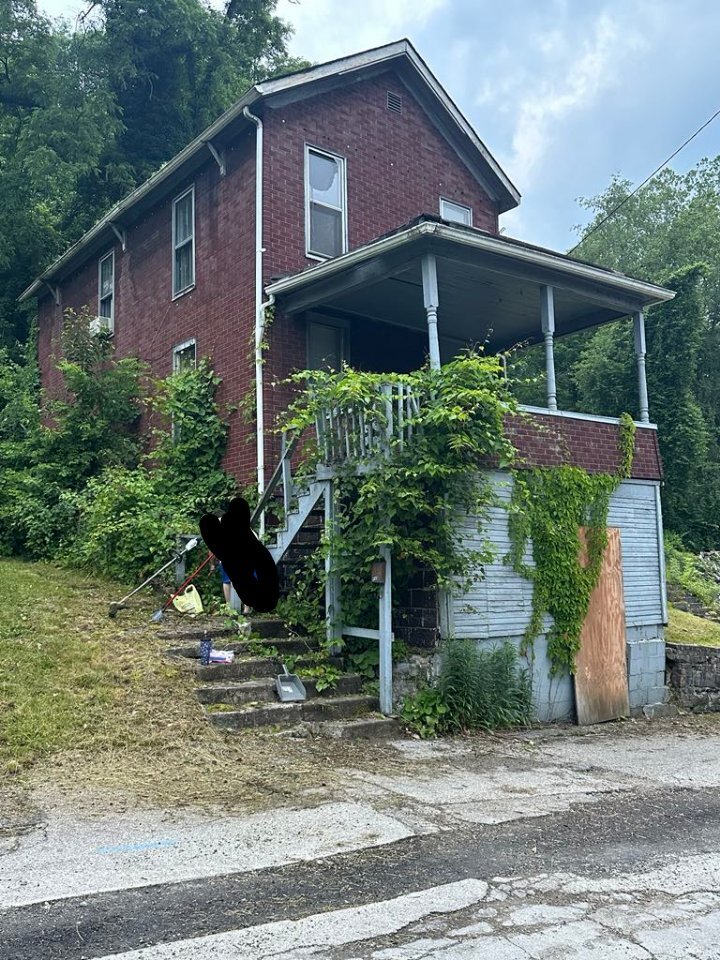
What If Your Rental Property Needs Major Repairs?
Perhaps the roof is leaking.
Maybe the furnace is old.
Or the house needs foundation repairs, plumbing work, or significant interior updates.
You may not want to spend another $20,000 or $30,000 on a property you’re ready to sell.
Some investors purchase rental properties in their existing condition.
However, the expected repair costs will affect the offer.
Important: Repairs And Tenant Rights
Selling a property as-is doesn’t automatically eliminate a landlord’s legal duties while the tenancy continues.
Ohio law imposes certain maintenance and habitability obligations on landlords.
If the house has serious safety or habitability problems, obtain appropriate legal and professional guidance.
Don’t assume a pending sale excuses existing obligations.
Coming soon: Our guide on selling a house with major repairs in Whitehall Ohio 🔗 (Future: Post #10 – Major Repairs).
What If The Rental Property Is In Foreclosure?
Perhaps rent stopped coming in, but the mortgage payments continued.
Now you’re behind on the loan.
A sale may be worth considering if the property has equity.
However, foreclosure deadlines matter.
If a foreclosure lawsuit has been filed, consult an Ohio attorney.
A purchase agreement doesn’t automatically stop foreclosure.
Our guide on facing foreclosure in Whitehall Ohio 🔗 (Post #2 – Foreclosure) explains the process.
What If You Inherited A Rental Property With Tenants?
Maybe your parents owned a Whitehall rental house.
After their passing, you inherited the property.
The tenants are still living there, and you don’t want to become a landlord.
You may be able to sell the property, but first determine who has legal authority.
If the property is part of probate or a trust, additional documentation may be required.
The existing tenancy must also be addressed.
Our guide on inheriting a house in Whitehall Ohio 🔗 (Post #3 – Inherited House) explains those considerations.
What If The Tenants Left The House Full Of Belongings?
Sometimes tenants move out but leave furniture, clothing, appliances, or other possessions behind.
Before disposing of those items, determine whether the tenancy has legally ended and what requirements apply.
Don’t assume everything left behind automatically belongs to the landlord.
Depending on the circumstances, legal procedures or other obligations may apply.
If there is a dispute, consult an Ohio landlord-tenant attorney before removing or discarding property.
Coming soon: Our guide on selling a hoarder house in Whitehall Ohio 🔗 (Future: Post #12 – Hoarder House).
Do You Have To Pay Capital Gains Tax When Selling A Rental Property?
Potentially.
Selling an investment property may create federal and state income tax consequences.
The calculation can involve:
- Original purchase price.
- Capital improvements.
- Adjusted tax basis.
- Depreciation allowed or allowable.
- Sale price.
- Qualifying selling expenses.
- Other applicable adjustments.
Depreciation Recapture
If you’ve claimed depreciation on a rental property, selling may result in tax consequences related to depreciation.
The calculation depends on your circumstances.
What About A 1031 Exchange?
Some investors consider a Section 1031 like-kind exchange when selling investment real estate and acquiring qualifying replacement real estate.
A properly structured exchange may defer certain gains, subject to strict requirements.
Important deadlines generally include identifying replacement property within 45 days and completing the exchange within 180 days, subject to applicable rules and limitations.
You generally cannot receive the sale proceeds directly and then decide to treat the transaction as a valid deferred exchange.
A qualified intermediary and tax professional should be involved before closing.
Consult your CPA before selling if taxes or a 1031 exchange could materially affect your decision.
Do You Have To Disclose Problems When Selling A Rental Property?
Ohio generally requires sellers of covered residential real estate to provide a residential property disclosure form, subject to statutory exceptions.
The requirements are addressed in Ohio Revised Code Section 5302.30.
An as-is sale doesn’t automatically eliminate applicable disclosure obligations.
If you know about significant defects, don’t conceal or misrepresent them.
Also provide accurate information about the tenancy.
For example, don’t represent that a tenant is current on rent if you know the tenant is several months behind.
For most housing built before 1978, federal lead-based paint disclosure requirements may also apply, subject to exceptions.
If you’re uncertain about the requirements, consult an Ohio real estate attorney.
What Documents Should You Prepare Before Selling A Tenant-Occupied House?
Having the relevant documents available can make the transaction easier.
Consider gathering:
- Current lease agreements.
- Lease amendments.
- Rent payment history.
- Security deposit records.
- Tenant contact information.
- Maintenance records.
- Utility arrangements.
- Property tax information.
- Insurance information.
- Mortgage statements.
- Any pending legal notices or court documents.
Don’t share sensitive tenant information unnecessarily.
A buyer should receive only information appropriate for legitimate transaction due diligence, handled securely and lawfully.
Questions To Ask Before Selling Your Whitehall Rental Property
Before signing a purchase agreement, ask the buyer several questions.
Will You Purchase With The Tenants In Place?
Not every buyer wants an occupied rental.
Will You Honor The Existing Lease?
The buyer must comply with applicable legal obligations, and the agreement should accurately address the tenancy.
How Will The Security Deposit Be Handled?
Make sure the closing documents account for the deposit and applicable obligations.
How Will Rent Be Prorated?
The closing statement should reflect the agreed calculation.
How Many Inspections Or Showings Are Needed?
This matters when tenants are living in the property.
Are There Financing Or Inspection Contingencies?
Understand the buyer’s cancellation rights.
Who Pays Closing Costs?
Request a clear explanation of the proposed expenses.
What Happens If The Buyer Doesn’t Close?
Review earnest money, deadlines, and default provisions.
How Sell House Columbus Buys Rental Properties In Whitehall Ohio
At Sell House Columbus, we’ve been buying houses throughout Central Ohio since 2012.
We work with property owners who are ready to move on from rentals that require too much time, money, or attention.
Our process is straightforward.
Step 1: Tell Us About Your Rental Property
Call or text 614-300-5151, or complete the form on our website.
Let us know the Whitehall property address, condition, and occupancy situation.
If tenants are living there, tell us whether the tenancy is fixed-term or month-to-month.
Step 2: We Evaluate The Property
We’ll review the location, condition, comparable sales, and relevant rental information.
Depending on the circumstances, we may arrange a walkthrough consistent with the tenant’s rights and applicable law.
Step 3: Receive A No-Obligation Cash Offer
If the property fits our buying criteria, we’ll explain our offer and proposed terms.
You can compare that offer with listing traditionally or continuing to rent the property.
There’s no obligation to accept.
Step 4: Coordinate With The Title Company
If you decide to proceed, we’ll work with the title company to address ownership, mortgage payoffs, liens, and other closing requirements.
We’ll also discuss the lease, rent prorations, security deposit, and other agreed occupancy arrangements.
Step 5: Work Toward Closing
We can often work toward closing in approximately two weeks when title and other requirements allow.
Complicated tenant or legal situations may take longer.
We’ll explain what’s realistic before moving forward.
Frequently Asked Questions About Selling A Rental Property With Tenants In Whitehall Ohio
Can I sell my rental property with tenants still living there?
Yes, generally. The sale must account for the existing tenancy and applicable law.
Does selling the house automatically end the lease?
No. A sale generally doesn’t automatically terminate a lawful lease.
Can I sell a house with a month-to-month tenant?
Yes, potentially. Proper notice and other legal requirements must be followed if the tenancy is to be terminated.
Do I have to evict tenants before selling?
Not necessarily. Some buyers purchase tenant-occupied properties.
Can I sell a rental property with nonpaying tenants?
Potentially. Some investors evaluate properties with delinquent tenants.
Can I show the house while tenants are living there?
Potentially. Access must comply with the lease and applicable Ohio law.
What happens to the tenant’s security deposit?
The seller and buyer should address the deposit in the transaction while complying with applicable legal obligations.
Can I sell a rental house that needs major repairs?
Potentially. Some investors purchase properties in their existing condition.
Can I sell an inherited rental property?
Potentially. Ownership and estate requirements must be addressed.
Can I sell a rental property in foreclosure?
Potentially. Foreclosure deadlines and legal requirements matter.
Will I owe taxes when selling a rental property?
Possibly. Capital gains and depreciation-related tax consequences may apply.
Can I use a 1031 exchange?
Potentially, if the transaction qualifies and the strict requirements are satisfied.
How quickly can Sell House Columbus close?
We can often work toward closing in approximately two weeks when title and other requirements allow.
Is there a fee to receive a cash offer?
No. Our cash offers are no-obligation.
Ready To Sell Your Rental Property In Whitehall Ohio? You Have Options.
Owning rental property can be a great investment.
But it can also become a responsibility you’re ready to leave behind.
Maybe you’re tired of maintenance calls.
Perhaps the house needs expensive repairs.
You might have tenants who are behind on rent.
Or maybe you’re simply ready to sell and move your money into another investment.
Whatever the situation, you don’t necessarily have to wait until the house is vacant before exploring a sale.
At Sell House Columbus, we’ve been buying houses throughout Central Ohio since 2012.
We have an A+ rating with the Better Business Bureau and more than 180 five-star Google reviews.
We evaluate rental properties in a variety of conditions, including certain tenant-occupied homes.
We’re not going to tell you that selling directly is always the best choice.
If keeping the property or listing traditionally produces a better outcome, that’s worth considering.
But if you’re ready to explore a straightforward cash sale without taking on a major renovation, we’d be happy to explain whether we can help.
There’s no pressure and no obligation to accept an offer.
Call or text 614-300-5151.
Visit https://sellhousecolumbus.com to request a no-obligation cash offer.
Or learn more about how we buy houses in Whitehall Ohio
Let’s see what makes sense for your rental property, your tenants, and your financial goals.
