
Going Through A Divorce In Dublin? Deciding What To Do With The House Can Be One Of The Hardest Parts
Divorce is difficult enough without having to figure out what happens to the family home.
For many couples in Dublin, Ohio, the house represents much more than a financial investment.
It’s where you raised your children, celebrated holidays, hosted family gatherings, and built a life together.
Maybe you purchased a home in Muirfield Village years ago when your family was growing.
Perhaps you own a newer house in one of Dublin’s western neighborhoods.
Or maybe you and your spouse purchased a condominium near Bridge Park because you wanted a more convenient lifestyle.
Now your circumstances have changed.
One spouse may want to keep the house.
The other may want to sell and move forward.
You might disagree about the property’s value, who should make the mortgage payments, or whether repairs should be completed before listing.
And if the divorce is already creating financial pressure, the last thing either person wants is a lengthy real estate transaction that adds more uncertainty.
Here’s the important thing to understand.
You may be able to sell your house during divorce in Dublin Ohio without completing expensive repairs, managing months of showings, or waiting until every aspect of the divorce is finalized.
However, the timing and legal requirements depend on property ownership, any court orders, the divorce proceedings, and whether both spouses agree.
At Sell House Columbus, we’ve been buying houses throughout Central Ohio since 2012.
We work with homeowners facing a variety of difficult life transitions, including divorce and separation.
Our role isn’t to provide legal advice or take sides.
It’s to explain whether a straightforward cash sale might help both parties move forward.
This guide covers your selling options, how equity and mortgage obligations work, and what to consider before making a decision about your Dublin home.
🎥 Watch: Selling Your House During Divorce
If you’re going through a divorce and trying to decide what to do with the property, watch our video explaining how a direct home sale can work and why some couples prefer to avoid a traditional listing.

What Happens To A House During Divorce In Ohio?
One of the first questions divorcing homeowners ask is whether the house has to be sold.
The answer is no, not necessarily.
Ohio courts address the division of marital property as part of divorce proceedings.
Under Ohio Revised Code Section 3105.171, courts generally divide marital property equitably, with equal division as the starting point unless an equal division would be inequitable.
But equitable division doesn’t mean every asset must be sold or divided physically.
Depending on the circumstances, the house may be:
- Sold, with the net proceeds divided according to an agreement or court order.
- Awarded to one spouse, potentially with a financial adjustment or buyout.
- Temporarily retained while the parties work toward another arrangement.
- Addressed through a different court-approved property settlement.
The outcome depends on factors such as when the property was acquired, how it was financed, the source of funds, existing debts, and the parties’ overall financial circumstances.
For example, a house purchased during the marriage may generally be treated differently from a property one spouse owned before getting married.
However, premarital ownership doesn’t automatically resolve every question about appreciation, mortgage payments, or marital contributions.
An Ohio divorce attorney can explain how these rules apply to your property.
Does The House Have To Be Sold Before The Divorce Is Final?
Not always.
Some couples agree to sell their home while the divorce is pending.
Others wait until the court issues a final decree.
In certain cases, a court may issue temporary orders affecting the property, including occupancy, payments, or restrictions on transferring assets.
That’s why it’s important to involve your divorce attorney before signing a purchase agreement.
If both spouses agree to sell, their attorneys may be able to coordinate the sale and establish how the proceeds will be handled.
Depending on the circumstances, funds may be distributed at closing, held in escrow, or handled under a court-approved arrangement.
A cash buyer cannot override divorce court orders or bypass a spouse’s legal ownership rights.
A legitimate sale still requires the necessary authority, signatures, and compliance with applicable legal requirements.
Dublin Has A Unique Divorce Real Estate Consideration: Three Counties
Dublin is unusual because the city extends into Franklin, Delaware, and Union counties.
That can create confusion when homeowners are trying to understand property records, court proceedings, and real estate ownership.
The county where a house is located determines which county maintains certain property records.
But the court handling a divorce is not necessarily determined by the county where the house sits.
Ohio divorce venue and jurisdiction depend on applicable legal requirements, including residency and court rules.
For example, a couple could own a house in the Delaware County portion of Dublin while their divorce case is properly filed in another Ohio county.
When preparing to sell, make sure your attorney and title company have the correct information about both the property and the divorce proceedings.
Useful official resources include:
Franklin County Clerk of Courts: https://clerk.franklincountyohio.gov
Delaware County Clerk of Courts: https://clerkofcourts.co.delaware.oh.us
Union County Government: https://www.co.union.oh.us
You can also review Ohio’s divorce and domestic relations statutes through Ohio Revised Code Chapter 3105.
The Three Most Common Options For The Marital Home
Before deciding to sell, it’s helpful to understand the main alternatives.
Option 1: One Spouse Keeps The House
Sometimes one spouse wants to remain in the property.
This may be especially important when children are involved.
Perhaps the family has lived in the same Dublin neighborhood for years, and one parent wants to minimize disruption to the children’s routines.
If one spouse keeps the house, several financial questions need to be addressed.
Can that person afford the mortgage independently?
Will the lender approve refinancing if necessary?
How will the other spouse’s equity interest be handled?
What happens if the spouse keeping the house can’t qualify for a new loan?
And how will the property be maintained?
Keeping the house can make sense, but it requires a realistic financial plan.
Option 2: List The House With A Real Estate Agent
If both spouses agree to sell and the house is in good condition, listing traditionally may produce the highest net return.
This can be especially attractive in desirable Dublin neighborhoods where the property appeals to owner-occupant buyers.
However, a traditional listing may involve repairs, cleaning, staging, photography, showings, inspections, financing contingencies, and negotiations.
Both spouses may need to cooperate throughout the process.
If communication is difficult, even routine decisions can become stressful.
Option 3: Sell Directly To A Cash Home Buyer
A direct sale may be worth considering when both spouses want to resolve the property quickly and avoid extensive preparation.
At Sell House Columbus, we evaluate properties in their existing condition.
If the house fits our buying criteria, we can explain our offer and proposed terms.
A direct purchase may reduce the need for repairs, staging, repeated showings, and traditional buyer mortgage financing.
However, an investor’s offer may be lower than the price achievable through a successful retail listing.
The right option depends on the home’s condition, the amount of equity, the divorce timeline, and what both parties want to accomplish.
For a broader comparison, read our guide on how to sell your house fast in Dublin Ohio 🔗 (Post #1 – Sell Fast).
What If One Spouse Wants To Sell And The Other Refuses?
This is one of the most challenging situations.
Maybe you’ve already moved out and want the house sold.
But your spouse still lives there and doesn’t want to leave.
Or perhaps one person believes the house should be listed for a much higher price, while the other wants to accept an offer and move on.
A buyer can’t solve that disagreement simply by presenting a purchase agreement.
If both spouses have ownership interests or signatures are legally required, the transaction generally cannot proceed without resolving those requirements.
And if a divorce court has issued orders affecting the property, those orders must be respected.
What Can You Do?
Start by discussing the disagreement with your divorce attorney.
Depending on the circumstances, mediation, negotiation, or court involvement may help establish a path forward.
It may also help to obtain an independent appraisal or comparative market analysis.
Sometimes disagreements are driven by different assumptions about the property’s value.
Having credible numbers can make the discussion more productive.
If both parties eventually agree to sell, they can then compare a traditional listing with a direct purchase.
At Sell House Columbus, we’re happy to provide a no-obligation offer for consideration, but we won’t pressure either spouse or pretend that a buyer can bypass the legal process.
How Is Equity Divided When Selling A House During Divorce?
For many Dublin homeowners, equity is one of the most significant financial issues.
Equity is generally the difference between the property’s value and the debt secured against it.
However, the amount of equity available to divide after a sale also depends on selling expenses and other obligations.
Consider this hypothetical example.
A divorcing couple owns a home in Dublin with the following numbers:
| Item | Illustrative Amount |
|---|---|
| Sale price | $475,000 |
| Mortgage payoff | -$285,000 |
| Selling and closing expenses | -$25,000 |
| Estimated net sale proceeds | $165,000 |
In this example, the estimated net proceeds are $165,000.
If the parties agree, or the court orders, that those proceeds should be divided equally, each spouse would receive $82,500.
But that’s only an illustration.
The actual division may differ because of separate property claims, marital debts, financial offsets, court orders, or other factors.
Don’t assume that selling a jointly owned house automatically means each spouse receives exactly half the proceeds.
Your divorce attorney should help determine how the money will be distributed.
The title company can then coordinate the closing according to the applicable agreement and legal requirements.
What If Both Spouses Are On The Mortgage?
This is extremely important.
A divorce decree and a mortgage loan are two different things.
Suppose a divorce agreement says one spouse will keep the house and make all future mortgage payments.
That agreement doesn’t necessarily release the other spouse from liability to the mortgage lender.
If both spouses signed the note, the lender may still have contractual rights against both borrowers unless the loan is refinanced, paid off, or the lender otherwise provides an effective release.
That’s why refinancing or selling the property is often part of the discussion.
Example: One Spouse Keeps The House But Doesn’t Refinance
Imagine both spouses signed the mortgage.
The divorce decree awards the property to one spouse.
That spouse remains in the house but later misses payments.
The other spouse may still face credit or financial consequences if their name remains on the mortgage obligation.
A deed transferring ownership doesn’t automatically remove someone from the loan.
If you’re considering a buyout or ownership transfer, discuss the mortgage implications with your attorney and lender before signing documents.
Selling the house and paying off the mortgage through closing may provide a cleaner financial separation in some situations.
What If Your Dublin Home Has A Low Mortgage Interest Rate?
This is a consideration that can make divorce decisions more complicated.
Perhaps you refinanced your Dublin house several years ago and secured a relatively low fixed interest rate.
Now one spouse wants to keep the property.
But refinancing into a new loan could mean a different interest rate and monthly payment.
That may make the house less affordable.
Before agreeing to a buyout, evaluate whether the spouse keeping the property can realistically satisfy any required financing terms.
Don’t assume that because the current payment is manageable, refinancing will be equally affordable.
If a refinance isn’t practical, selling may become the more realistic option.
Selling A House In Muirfield Village During Divorce
Muirfield Village and the surrounding established neighborhoods present a situation that many longtime homeowners recognize.
A couple may have purchased a larger family home years ago.
The children grew up there.
The property has appreciated, but maintaining it requires time and money.
During divorce, one spouse may want to stay because of the emotional attachment.
The other may prefer to sell and divide the equity.
Larger homes can also carry significant ongoing expenses.
Property taxes, insurance, landscaping, association obligations, utilities, and repairs may be difficult for one person to manage.
Before deciding who keeps the property, consider the full cost of ownership.
If the house needs substantial updates, also determine whether those expenses are realistic.
A traditional listing may make sense if both spouses are willing to prepare the house.
But if neither wants to coordinate renovations or maintain the property during a prolonged sale, a direct as-is offer may be worth evaluating.
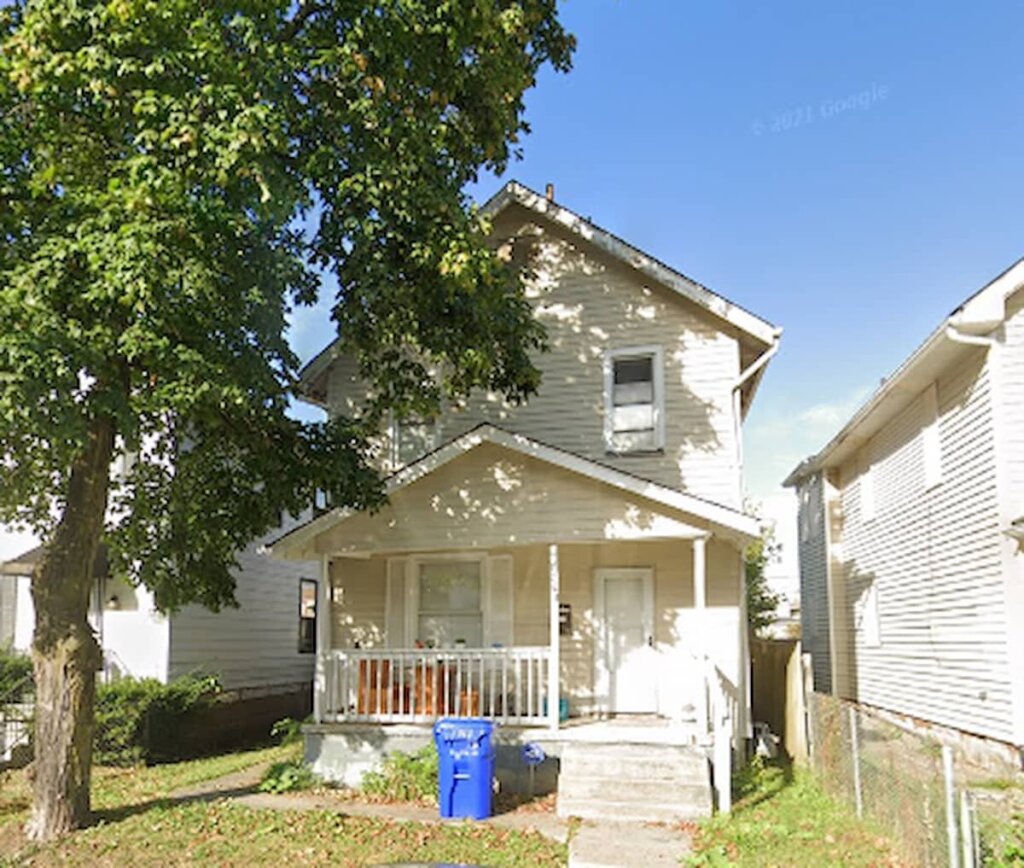
Selling A Dublin Condominium Or Townhome During Divorce
Not every divorcing Dublin homeowner owns a detached single-family house.
The Bridge Street District and surrounding areas include condominiums, townhomes, and other residential options.
These properties may involve condominium associations or homeowners associations.
That means a sale may require additional documents or consideration of assessments, association rules, and other obligations.
For example, the parties may need to determine how outstanding association fees will be paid.
A buyer may also request resale information and governing documents.
If one spouse wants to keep the property, the monthly association expenses should be included in the affordability calculation.
The property type doesn’t eliminate the need to address ownership and mortgage obligations.
What If The House Needs Repairs And Neither Spouse Wants To Pay?
This is another common problem.
Maybe the house needs a new roof.
Perhaps the kitchen is outdated.
Or there are water damage, flooring, plumbing, or foundation issues.
Both spouses may agree the repairs are necessary to achieve the best retail price.
But neither wants to spend the money.
They may also disagree about which contractor to hire or how the expenses should be divided.
If the divorce is already contentious, managing a renovation together can become another source of conflict.
Selling As-Is May Be An Alternative
Instead of investing in repairs, the parties can explore selling to a buyer willing to purchase the house in its current condition.
At Sell House Columbus, we consider properties with significant repair needs.
The condition affects the offer, but you don’t need to complete renovations before contacting us.
Our guide on how to sell your house as-is in Dublin Ohio 🔗 (Post #5 – As-Is Hub) explains how these transactions work.
We’ll also cover more extensive property problems in how to sell a house with major repairs in Dublin Ohio 🔗 (Future: Post #10 – Major Repairs).
What If One Spouse Has Already Moved Out?
Sometimes one spouse moves out long before the divorce is finalized.
The other remains in the house.
That can create several practical questions.
Who is responsible for the mortgage?
Who pays property taxes and insurance?
Who handles repairs?
Does the spouse who moved out still have access to the property?
And what happens if the person remaining in the house refuses to cooperate with a sale?
These issues should be addressed through the parties’ attorneys and any applicable court orders.
Don’t assume that moving out automatically gives up your ownership interest.
Likewise, remaining in the house doesn’t necessarily mean you’re entitled to keep it permanently.
If the property is ultimately going to be sold, it’s helpful to establish expectations about maintenance, access, showings, and moving arrangements in advance.
What If You’re Behind On Mortgage Payments During Divorce?
Divorce can put tremendous pressure on household finances.
Two people who once shared a mortgage may now be paying for separate residences.
Legal expenses can also add up.
And if one spouse stops contributing to the mortgage, the account may become delinquent.
If you’re behind on payments, contact the mortgage servicer promptly.
Depending on your loan and circumstances, assistance options may be available.
If the house is no longer affordable, selling may be worth considering.
However, if foreclosure proceedings have already started, timing becomes important.
A pending divorce doesn’t automatically stop foreclosure.
And a signed purchase agreement doesn’t automatically stop a scheduled foreclosure sale.
Our guide on facing foreclosure in Dublin Ohio 🔗 (Post #2 – Foreclosure) explains how Ohio’s judicial foreclosure process works.
You can also read our upcoming guide on what to do when you’re behind on mortgage payments in Dublin Ohio 🔗 (Future: Post #7 – Behind On Payments).
If court proceedings are underway, coordinate with your divorce attorney and an Ohio foreclosure attorney as appropriate.
Can You Sell The House If There’s A Divorce-Related Court Order?
Potentially, but the order matters.
Ohio domestic relations courts may issue temporary orders or other restrictions affecting marital property during a pending case.
Those orders may limit the ability to transfer, encumber, or dispose of assets without consent or court approval.
Before entering into a sale agreement, have your attorney review any applicable orders.
If the parties agree to sell, their attorneys may be able to obtain the necessary approval or document the agreement appropriately.
A legitimate buyer and title company will need to confirm that the sale can legally proceed.
Never sign a purchase agreement assuming that an existing court order can be ignored.
How Much Does It Cost To Keep The House While The Divorce Is Pending?
One of the biggest financial mistakes couples can make is focusing only on the expected selling price while ignoring the ongoing cost of keeping the house.
Consider a hypothetical Dublin property.
| Monthly Expense | Illustrative Cost |
|---|---|
| Mortgage payment, including escrow | $2,650 |
| Utilities | $275 |
| Lawn care and maintenance | $175 |
| Additional repairs and upkeep reserve | $250 |
| Total monthly carrying cost | $3,350 |
These numbers are illustrative and are not estimates for a specific Dublin property.
If the house remains unsold for six months, the total carrying cost in this example would be $20,100.
Some of the mortgage payments may reduce principal, so not every dollar is necessarily an economic loss.
But the monthly cash outflow is still real.
If the house is vacant, insurance considerations and other expenses may also change.
That’s why the timeline matters when evaluating whether to renovate, list, or sell directly.
Should You Sell Before Or After The Divorce Is Final?
There’s no universal answer.
Selling before the divorce is final may allow the parties to resolve a major financial obligation sooner.
It may also simplify the division of assets if the proceeds can be handled under an appropriate agreement.
However, selling during the case may require additional coordination with attorneys and the court.
Waiting until after the divorce may make sense if ownership and distribution issues need to be resolved first.
But it may also mean continuing to pay the mortgage, taxes, insurance, and maintenance expenses.
The best approach depends on the legal situation, finances, and whether the parties can cooperate.
Ask your attorney how the proposed timing affects your property settlement and legal obligations.
How Sell House Columbus Buys Houses During Divorce
At Sell House Columbus, we understand that divorce can involve difficult conversations and competing priorities.
Our goal is to provide a straightforward option, not add more pressure.
We’ve been buying houses throughout Central Ohio since 2012.
Here’s how the process works.
Step 1: Tell Us About The Property
Call or text 614-300-5151, or complete the form on our website.
Let us know the address, condition, and whether the house is involved in a pending divorce.
You don’t need to share private details about the relationship.
We mainly need to understand who owns the property and whether any legal restrictions may affect a sale.
Step 2: We Evaluate The House
We’ll review the property’s location, condition, and relevant comparable sales.
Depending on the circumstances, we may arrange a convenient walkthrough.
Step 3: Receive A No-Obligation Cash Offer
If the property fits our buying criteria, we’ll explain our offer and proposed terms.
Both parties can review the offer with their attorneys and compare it with other selling options.
There’s no obligation to accept.
Step 4: Coordinate With The Title Company
If the parties decide to proceed, we’ll work with the title company to determine what is required for closing.
The transaction may involve mortgage payoffs, required signatures, attorney coordination, and any applicable court approvals.
The title company can help prepare the settlement statement and coordinate the handling of proceeds according to the transaction documents and legal requirements.
Step 5: Close When The Necessary Requirements Are Satisfied
We can often work toward closing in approximately two weeks when ownership, title, and other requirements are clear.
However, divorce-related legal issues may require additional time.
We’ll discuss a realistic timeline rather than promising a closing date that hasn’t been confirmed.
Why Some Divorcing Homeowners Prefer A Direct Cash Sale
A traditional listing can work well when both spouses agree, the property is in good condition, and there’s enough time to manage the process.
But a direct sale may offer certain practical advantages.
You may be able to avoid expensive renovations.
You may not need to stage the house.
There may be fewer showings and less disruption.
And the transaction isn’t dependent on a traditional buyer obtaining mortgage financing.
That can be especially helpful when both parties want to resolve the property and move forward.
However, a direct buyer generally accounts for repair costs, holding expenses, and risk when making an offer.
The offer may be lower than the amount achievable through a successful traditional listing.
We encourage homeowners to evaluate both options and choose what best fits their circumstances.
Frequently Asked Questions About Selling A House During Divorce In Dublin Ohio
Can I sell my house before my divorce is final?
Potentially, yes. The sale must comply with ownership requirements, applicable court orders, and any necessary agreements or approvals.
Does my spouse have to agree to sell the house?
That depends on ownership, legal requirements, and court orders. If both spouses have interests requiring their signatures, those interests generally must be properly addressed.
What if only one spouse’s name is on the deed?
That doesn’t necessarily resolve every marital property issue. Ohio law may recognize marital interests even when title is held in one spouse’s name. Consult your divorce attorney.
What if both spouses are on the mortgage?
Selling the property and paying off the loan may resolve the mortgage obligation through closing. A divorce decree alone doesn’t automatically release a borrower from lender liability.
Can I sell the house if my spouse refuses to cooperate?
A sale may require negotiation, mediation, or court involvement. A cash buyer cannot bypass necessary ownership rights or legal requirements.
Can I sell my Dublin house as-is during divorce?
Yes, potentially. You can explore selling to a buyer willing to purchase the property without requiring renovations.
How are the proceeds divided?
The division depends on the parties’ agreement, applicable Ohio law, and court orders. An equal split is not automatic in every case.
Can I sell a house in Muirfield Village during divorce?
Yes, provided the transaction satisfies the applicable ownership and legal requirements. Association obligations may also need to be addressed.
Can I sell a condominium near Bridge Park during divorce?
Potentially, yes. The transaction may also involve condominium association documents, assessments, and resale requirements.
What if we’re behind on mortgage payments?
Contact the mortgage servicer promptly and speak with your attorney. Selling may be one option, but active foreclosure proceedings can create important deadlines.
Do we both have to attend closing?
Not necessarily. The title company can explain available signing arrangements, but all required signatures and legal formalities must be satisfied.
How quickly can Sell House Columbus close?
We can often work toward closing in approximately two weeks when title and legal requirements allow. Pending divorce matters may extend the timeline.
Do you charge for a cash offer?
No. Our cash offers are no-obligation.
Selling Your House During Divorce In Dublin Ohio? Let’s Make The Real Estate Part Simpler
Divorce is a major life transition.
You may be dealing with attorneys, financial decisions, parenting arrangements, and uncertainty about what comes next.
The house is often one of the largest assets involved, which can make the decision especially difficult.
But you don’t necessarily have to spend months renovating, cleaning, and preparing the property for a traditional listing.
If both parties are considering a sale, a direct cash offer may provide another option to evaluate.
At Sell House Columbus, we’ve been buying houses throughout Central Ohio since 2012.
We have an A+ rating with the Better Business Bureau and more than 180 five-star Google reviews.
We take pride in treating homeowners respectfully, explaining our process clearly, and working toward straightforward transactions.
We’re not here to take sides in a divorce or offer legal advice.
We’re here to help you understand whether selling the property directly makes financial and practical sense.
Call or text 614-300-5151.
Visit https://sellhousecolumbus.com to request a no-obligation cash offer.
Or learn more about how we buy houses in Dublin Ohio
You have enough to deal with during a divorce. If selling the house is the right decision, we’d be happy to help make that part of the process more manageable.
Check out what other sellers are saying about us:
