Going Through A Divorce In Lancaster? Figuring Out What To Do With The House Can Be One Of The Hardest Decisions.
Divorce is difficult enough without having to figure out what happens to the family home.
Maybe you and your spouse have lived in your Lancaster, Ohio, house for 15 years.
Perhaps you’ve raised children there.
You might have spent years making mortgage payments, improving the property, and building equity.
Now you’re separating, and the house has become one of the biggest financial questions you need to resolve.
Who gets to keep it?
Should one spouse buy out the other?
What happens if neither person can afford the mortgage alone?
And if you decide to sell, how do you sell a house during divorce in Lancaster Ohio without making an already stressful situation even more complicated?
There isn’t one answer that works for every couple.
Some spouses decide to sell the house and divide the proceeds according to their agreement or court order.
Others arrange for one spouse to keep the property.
In some situations, the house needs substantial repairs, and neither person wants to spend more money fixing it before selling.
At Sell House Columbus, we’ve been buying houses throughout Central Ohio since 2012, including properties in Lancaster and Fairfield County.
We’ve worked with homeowners facing difficult life transitions, including divorce, financial hardship, inherited property issues, and the need to sell quickly.
We understand that selling a house during divorce isn’t just a typical real estate transaction.
There may be legal requirements, emotional considerations, financial disagreements, and important deadlines.
We’re not divorce attorneys, and we don’t determine how marital assets should be divided.
But if selling the property is part of your plan, we can explain how a direct as-is cash sale works and whether it might be a practical option.
This guide covers what happens to a house during divorce in Ohio, how mortgage obligations and home equity are handled, and the different ways to sell a Lancaster property while minimizing unnecessary complications.
🎥 Watch: Selling Your House During Divorce
If you’re going through a divorce and considering selling the family home, watch our video explaining the options and how a direct home sale may simplify the real estate portion of the process.

What Happens To Your House During Divorce In Ohio?
In Ohio, dividing property during divorce generally involves determining which assets are marital property, which are separate property, and how the assets should be allocated.
Ohio follows an equitable distribution framework.
That doesn’t necessarily mean every asset is automatically divided exactly 50/50 in every case.
Under Ohio Revised Code Section 3105.171, the court generally begins with an equal division of marital property unless an equal division would be inequitable, in which case it may make an equitable division.
The law also addresses separate property, valuation, and other important considerations.
Is Your Lancaster House Marital Property?
A house purchased during the marriage may be marital property, even if only one spouse’s name appears on the deed.
However, the answer depends on the circumstances.
For example:
- When was the house purchased?
- How was the purchase financed?
- Were marital funds used to pay the mortgage?
- Did either spouse own the property before marriage?
- Was the house inherited or gifted?
- Were separate funds used for improvements?
- Are there prenuptial or other enforceable agreements?
These details can affect the classification and division of the property.
Don’t assume the name on the deed alone determines who gets the house in a divorce.
An Ohio divorce attorney can explain how the law applies to your situation.
Three Common Options For The Family Home During Divorce
Most couples eventually consider three primary approaches.
Option 1: One Spouse Keeps The House
One spouse may want to remain in the property.
Perhaps the children attend nearby schools.
Maybe the house is close to work or family.
Or one person simply wants to keep the home.
This arrangement may require the spouse keeping the property to compensate the other spouse for their share of the equity.
It may also require refinancing or another approved arrangement to address the existing mortgage.
Option 2: Sell The House And Divide The Proceeds
The spouses may agree to sell the property and distribute the net proceeds according to their settlement agreement or court order.
This can provide a cleaner financial separation when neither person wants to keep the house.
However, the sale still needs to address the mortgage, title, closing expenses, and any applicable court requirements.
Option 3: Continue Owning The House Temporarily
Some couples decide to retain the property for a period of time.
For example, one spouse may remain in the home while children finish a school year.
Or the couple may agree to sell at a later date.
This can work, but it also requires clear agreements about mortgage payments, taxes, insurance, repairs, and future sale decisions.
Continuing to own property together after separation can create additional financial complications if expectations aren’t clearly documented.
Can You Sell Your House Before Your Divorce Is Finalized?
Potentially, yes.
A couple may be able to sell a jointly owned house while divorce proceedings are pending.
However, applicable court orders, temporary restraining orders, ownership rights, and other legal requirements may affect the transaction.
Some divorce cases include orders restricting the transfer or disposition of assets without agreement or court permission.
Don’t sign a purchase agreement or transfer a deed without confirming that the sale is permitted.
If your divorce is pending, ask your attorney whether:
- Both spouses must sign the purchase agreement.
- Court approval is required.
- Any temporary orders restrict the sale.
- The proceeds must be held in escrow.
- The settlement agreement addresses the house.
- There are deadlines or other conditions.
Selling before the divorce is finalized may be practical in some cases.
But it should be coordinated with the legal process.
Can You Sell The House After The Divorce Is Final?
Yes, provided the transaction complies with the divorce decree and applicable ownership requirements.
Some divorce agreements require the house to be listed by a particular date.
Others require a sale if one spouse cannot refinance within a specified period.
If your decree contains deadlines, review them carefully with your attorney.
A buyer and title company may need copies of relevant court orders or other documentation.
The divorce decree can establish obligations between the former spouses, but the title company still needs to determine who must sign to transfer the property.
What If Only One Spouse Is On The Deed?
This is a common question.
Perhaps the husband purchased the house before marriage.
Or the wife is the only person listed on the recorded deed.
That doesn’t necessarily resolve every issue.
Ohio law recognizes certain marital property rights, and a divorce court may have authority to address property interests even when legal title is held by one spouse.
Ohio also recognizes certain spousal rights that can affect real estate transactions.
A title company may require a spouse’s signature or additional documentation depending on the circumstances.
Don’t assume that being the only person on the deed means you can sell the property without considering the divorce proceedings.
What If Both Spouses Are On The Mortgage?
This is one of the biggest financial concerns.
Imagine you and your spouse purchased a Lancaster house together.
Both of you signed the mortgage note.
Now one spouse wants to keep the house.
The divorce agreement says that person will make the payments.
Does that automatically release the other spouse from the mortgage?
No. A divorce decree generally does not, by itself, release a borrower from contractual liability to the mortgage lender.
The lender’s rights under the loan documents are separate from the obligations established between spouses in a divorce agreement.
If both people remain liable, missed payments may affect both borrowers.
What Are The Options?
Depending on the loan and circumstances, possible approaches may include:
- Refinancing the mortgage into one spouse’s name.
- Obtaining an approved release of liability or other lender-approved arrangement, if available.
- Selling the property and paying off the mortgage.
- Maintaining the existing loan under an arrangement approved by the parties and consistent with applicable requirements.
If one spouse plans to keep the house, discuss the mortgage implications with the lender and your divorce attorney.
Don’t assume a quitclaim deed removes mortgage liability.
What Is A Quitclaim Deed, And Does It Solve The Problem?
A quitclaim deed transfers whatever ownership interest the grantor has in the property, subject to the deed’s terms and applicable law.
It may be used in certain divorce-related property transfers.
For example, one spouse may transfer their interest in the house to the other as part of an agreed property division.
However, a quitclaim deed doesn’t automatically remove a person’s name from the mortgage loan.
That distinction is critical.
You could potentially transfer your ownership interest while remaining obligated on the mortgage note.
Before signing a quitclaim deed, make sure you understand both the ownership consequences and the remaining debt obligations.
An Ohio divorce attorney and title professional can help coordinate the appropriate documents.
How Is Home Equity Calculated During Divorce?
Home equity is generally the difference between the property’s value and the debts secured by it.
But when a house is being sold, the amount available for distribution also depends on selling expenses and other obligations.
For example, imagine you and your spouse own a Lancaster house with an estimated market value of $260,000.
The mortgage payoff is $145,000.
That suggests approximately $115,000 in gross equity before selling expenses and other adjustments.
If the property sells, those expenses reduce the amount available for distribution.
Example: Selling A Lancaster Home During Divorce
| Item | Illustrative Amount |
|---|---|
| Sale price | $260,000 |
| Mortgage payoff | -$145,000 |
| Selling expenses | -$16,000 |
| Estimated net proceeds before other obligations | $99,000 |
These figures are hypothetical and don’t represent an appraisal, actual offer, or verified property value.
If the spouses agreed to divide those net proceeds equally, each would receive approximately $49,500.
But an equal split isn’t automatic in every case.
The actual distribution must follow the applicable agreement or court order.
Other debts, credits, or adjustments may also affect the result.
What If You And Your Spouse Disagree About The House’s Value?
Disagreements over value are common.
One spouse may believe the property is worth $300,000.
The other may think it’s worth $250,000.
Sometimes the difference comes from comparing the house with recently renovated properties.
Other times, one person may underestimate the repairs needed.
Ways To Establish Value
You may consider:
- A professional appraisal.
- A comparative market analysis from a real estate agent.
- Recent comparable sales.
- Contractor estimates for necessary repairs.
- Written purchase offers.
A professional appraisal can be useful when the parties need a valuation for negotiations or court proceedings.
A cash offer can show what a particular buyer is willing to pay under specific terms, but it isn’t necessarily the same as an appraisal or full retail market value.
If the value is disputed, work with your attorneys and appropriate valuation professionals.
What If Your Lancaster House Needs Repairs?
This can make a divorce-related sale more complicated.
Perhaps the roof needs replacement.
Maybe the basement has water problems.
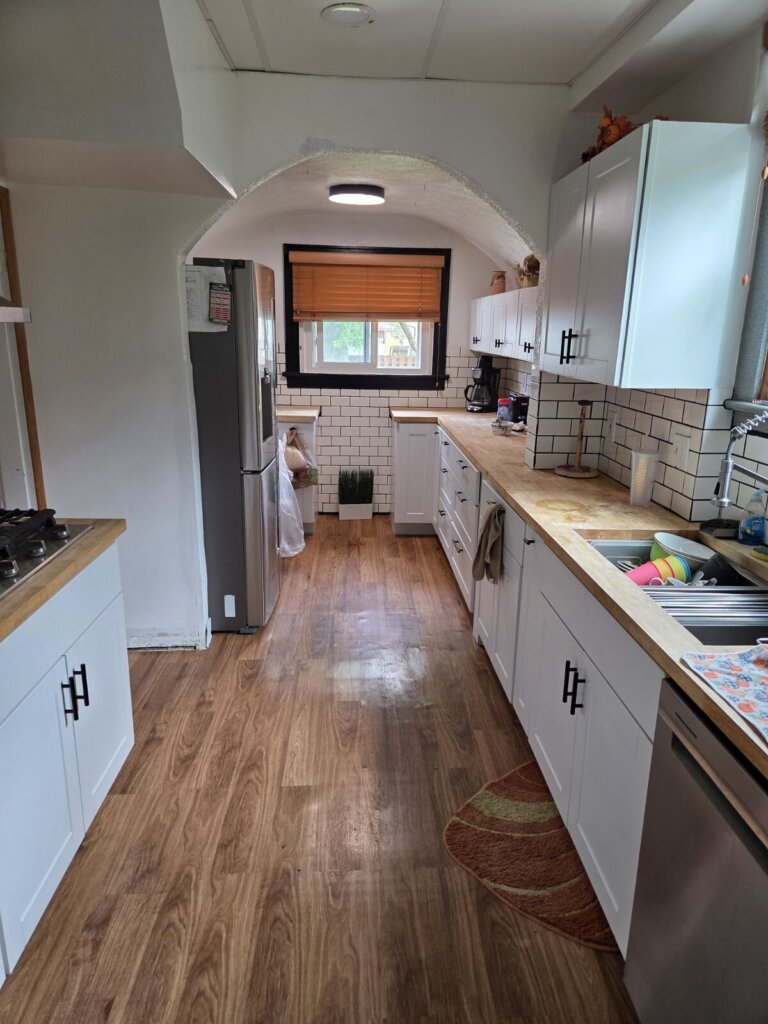
Or the kitchen and bathrooms haven’t been updated in decades.
One spouse may want to renovate before selling.
The other may want to sell immediately.
And neither may want to pay for the improvements.
Lancaster has many established neighborhoods with older homes, including properties near downtown, East Main Street, and the city’s long-established residential areas.
Some of these homes have attractive architectural features but may require expensive updates.
Do You Have To Fix Everything Before Selling?
Not necessarily.
You can explore listing the property as-is or selling directly to a buyer willing to take on repairs.
Our guide on selling your house as-is in Lancaster Ohio explains the options.
If the property has major structural or mechanical issues, our upcoming guide on selling a house with major repairs in Lancaster Ohio will cover those situations.
What If Neither Spouse Wants To Pay For Repairs?
This is one reason some couples consider a direct sale.
A traditional listing may require preparation, cleaning, painting, landscaping, or repairs.
Those expenses can create disagreements.
Who pays?
Will the money be reimbursed at closing?
What happens if the repairs cost more than expected?
A direct as-is sale may reduce the need for those decisions.
However, an investor’s offer may be lower than the price achievable through a successful traditional listing.
The parties should compare realistic net proceeds rather than focusing only on the highest possible sale price.
Should You List Traditionally Or Sell For Cash During Divorce?
Both options can make sense.
The best choice depends on the condition of the property, the legal circumstances, and the parties’ priorities.
Traditional Listing
A traditional listing may provide broad market exposure and the opportunity to achieve a higher sale price.
But it may involve:
- Repairs and preparation.
- Showings.
- Inspections.
- Negotiations.
- Buyer financing.
- A longer or less predictable timeline.
If both spouses are cooperative and the property is in good condition, listing traditionally may be an excellent choice.
Direct Cash Sale
A direct cash buyer may be able to purchase the property without requiring major repairs.
That can reduce some of the preparation and financing uncertainty.
At Sell House Columbus, we evaluate properties in their current condition.
If the house fits our buying criteria, we can explain a no-obligation cash offer.
However, the offer may be lower than the price achievable through a successful retail sale.
The right decision depends on the expected net proceeds, timeline, and practical considerations.
Our guide on how to sell your house fast in Lancaster Ohio compares the major selling methods.
Example: Comparing A Traditional Listing With An As-Is Sale
Imagine a couple owns a Lancaster house that could sell for $250,000 after repairs.
The house needs approximately $18,000 in improvements.
They also receive an as-is cash offer of $210,000.
| Item | Repair And List | Sell As-Is |
|---|---|---|
| Sale price | $250,000 | $210,000 |
| Repairs and preparation | -$18,000 | $0 |
| Selling expenses | -$15,000 | -$3,000 |
| Carrying costs | -$4,000 | -$1,000 |
| Estimated proceeds before debt payoff and taxes | $213,000 | $206,000 |
These figures are illustrative, not an appraisal, market estimate, or actual cash offer.
In this example, repairing and listing produces approximately $7,000 more before debt payoff and taxes.
But it also requires the parties to fund repairs, coordinate contractors, and manage the listing process.
For some couples, that additional return may justify the work.
For others, a simpler transaction may be preferable.
The key is making a decision based on realistic numbers and the terms of the divorce agreement.
What If One Spouse Refuses To Sell?
This can create a difficult situation.
Perhaps one spouse wants to sell and divide the proceeds.
The other wants to keep the house but can’t afford to refinance.
Or one person simply refuses to cooperate.
A real estate buyer cannot resolve that dispute by ignoring ownership rights or court orders.
Depending on the circumstances, the divorce court may address the property through its orders.
If a party refuses to comply with an existing order, legal enforcement may be necessary.
Don’t attempt to pressure a spouse into signing documents or transfer ownership without proper authority.
An Ohio divorce attorney can explain the available options.
What If One Spouse Has Already Moved Out?
Moving out doesn’t necessarily eliminate ownership rights or mortgage obligations.
A spouse who no longer lives in the house may still be a legal owner or borrower.
If both spouses remain on the mortgage, payment obligations may continue.
The parties should clarify:
- Who pays the mortgage.
- Who pays property taxes and insurance.
- Who handles repairs.
- Who maintains the lawn.
- Who pays utilities.
- Who has access to the property.
- How selling expenses will be handled.
These arrangements should be consistent with any court orders.
What If The House Is Vacant During Divorce?
Sometimes both spouses move out.
The house sits empty while the divorce proceeds.
That can create additional expenses and risks.
You may still need to pay for:
- Insurance.
- Utilities.
- Property taxes.
- Lawn care.
- Heating.
- Repairs.
- Security.
Vacant properties may also have different insurance requirements.
Contact your insurer to confirm appropriate coverage.
During Lancaster’s colder months, an empty house can be vulnerable to frozen pipes and unnoticed water damage.
Our upcoming guide on selling a vacant house in Lancaster Ohio will explain those considerations.
What If You’re Behind On Mortgage Payments During Divorce?
This is a serious issue.
Divorce can put pressure on household finances.
Two people who previously shared expenses may now be paying for separate households.
If the mortgage becomes delinquent, contact the servicer promptly.
Ask about available assistance and the amount required to bring the loan current.
If foreclosure proceedings have begun, obtain legal guidance.
Our guide on facing foreclosure in Lancaster Ohio explains the process.
Our upcoming guide on what to do when you’re behind on mortgage payments in Lancaster Ohio will cover early-stage options.
What If The Divorce Involves Children?
When children are involved, the family home may have additional emotional and practical significance.
Perhaps the children attend Lancaster City Schools.
Maybe they have lived in the same neighborhood for years.
Or the family wants to minimize disruption during the school year.
Some parents consider delaying a sale or arranging for one spouse to remain in the home temporarily.
That may be appropriate in certain circumstances.
But the arrangement should account for affordability, mortgage obligations, maintenance, and the eventual disposition of the property.
A divorce attorney can help address those issues within the broader family-law process.
What If The Property Is In A Trust Or Was Inherited?
Not every house involved in a divorce is straightforward marital property.
Perhaps one spouse inherited the property.
Maybe it was owned before the marriage.
Or the house is held in a trust.
Ohio law distinguishes marital and separate property, but classification can depend on factors such as tracing, improvements, and the use of marital funds.
Don’t assume an inherited house is automatically excluded from every divorce-related financial issue.
And don’t assume a trust automatically prevents the court from considering relevant property interests.
Our guide on inheriting a house in Lancaster Ohio explains inheritance and ownership considerations.
For divorce-specific classification, consult an Ohio family-law attorney.
What Documents Should You Gather Before Selling?
If the house will be sold during divorce, organizing the relevant documents can help avoid delays.
Useful items include:
- The recorded deed.
- Current mortgage statement.
- Mortgage payoff information.
- Property tax information.
- Homeowners insurance information.
- Any home equity loan or line of credit.
- Relevant divorce court orders.
- The settlement agreement, if applicable.
- Any appraisal or valuation reports.
- Repair estimates.
- Information about outstanding liens.
- Any applicable trust or estate documents.
The title company and attorneys can help determine what additional documentation is necessary.
How Does Closing Work When A House Is Sold During Divorce?
The closing process resembles a typical real estate sale, but there may be additional requirements.
The title company generally reviews ownership and liens.
It obtains mortgage payoff information.
It prepares the necessary closing documents and settlement statement.
If both spouses must sign, arrangements need to be made for their signatures.
If the divorce agreement or court order requires specific handling of the proceeds, those instructions need to be addressed appropriately.
Can The Proceeds Be Split At Closing?
Potentially.
Depending on the transaction, title company procedures, and legal instructions, proceeds may be distributed according to an agreed arrangement or court order.
In some cases, funds may need to be held in escrow pending further agreement or court direction.
Don’t assume the title company can decide how the money should be divided.
The parties should resolve distribution requirements with their attorneys before closing.
How Sell House Columbus Buys Houses During Divorce In Lancaster Ohio
At Sell House Columbus, we’ve been buying houses throughout Central Ohio since 2012.
We understand that divorce can create difficult decisions about the family home.
Our role is limited to the real estate transaction.
We don’t decide who is entitled to the property or how proceeds should be divided.
But if selling the house is part of your plan, we can provide a straightforward option to consider.
Step 1: Tell Us About The Property
Call or text 614-300-5151, or complete the form on our website.
Let us know the address, condition, and what you’re hoping to accomplish.
You don’t need to explain every personal detail of your divorce.
We primarily need to understand the property’s condition, ownership, and whether the parties have authority to sell.
Step 2: We Evaluate The House
We’ll review the location, condition, and comparable sales.
Depending on the circumstances, we may arrange a convenient walkthrough.
Step 3: Receive A No-Obligation Cash Offer
If the property fits our buying criteria, we’ll explain our offer and proposed terms.
Both parties can review the information with their attorneys.
There’s no obligation to accept.
Step 4: Coordinate With The Title Company And Attorneys
If you decide to proceed, we’ll work with the title company to address ownership, mortgage payoffs, liens, and other requirements.
Any necessary court orders or legal approvals must be handled appropriately.
Step 5: Close When Everything Is Ready
We can often work toward closing in approximately two weeks when title and other requirements allow.
Divorce-related legal requirements, title issues, or court proceedings may extend the timeline.
We’ll explain what’s realistic and work toward a closing schedule that makes sense.
Frequently Asked Questions About Selling A House During Divorce In Lancaster Ohio
Can I sell my house during divorce in Lancaster Ohio?
Potentially. The sale must comply with applicable ownership requirements, court orders, and other legal obligations.
Do both spouses have to agree to sell?
That depends on ownership, the divorce proceedings, and applicable court orders. A buyer cannot simply disregard another person’s legal rights.
Can I sell before the divorce is finalized?
Possibly. Consult your divorce attorney about any restrictions or approvals that apply.
What if only one spouse is on the deed?
The deed alone doesn’t necessarily determine every marital property right or sale requirement.
Does a divorce decree remove my name from the mortgage?
No. A divorce decree generally doesn’t automatically release a borrower from contractual liability to the lender.
Can a quitclaim deed remove me from the mortgage?
No. A quitclaim deed may transfer ownership interests, but it doesn’t automatically eliminate mortgage liability.
What if one spouse wants to keep the house?
A buyout, refinancing, or another approved arrangement may be possible, depending on the circumstances.
How is home equity divided during divorce?
The division depends on the applicable agreement or court order and Ohio’s property division laws.
What if my spouse refuses to sell?
A divorce attorney can explain available legal options, including the effect and enforcement of court orders.
Can we sell the house without making repairs?
Potentially. Some buyers will purchase properties in their existing condition.
What if we’re behind on mortgage payments?
Contact the mortgage servicer promptly and obtain legal guidance if foreclosure proceedings are involved.
Can the sale proceeds be divided at closing?
Potentially, depending on the legal instructions, title company procedures, and applicable agreements or orders.
How quickly can Sell House Columbus close?
We can often work toward closing in approximately two weeks when title and other requirements allow. Divorce-related legal issues may extend the timeline.
Is there a fee to receive a cash offer?
No. Our cash offers are no-obligation.
Going Through A Divorce In Lancaster Ohio? Let’s Make The House Sale One Less Thing To Worry About.
Divorce can bring major financial and emotional changes.
And deciding what to do with the family home is often one of the most difficult parts.
Maybe neither spouse wants to keep the property.
Perhaps the house needs expensive repairs.
You might be dealing with mortgage payments, court deadlines, or disagreements about what the house is worth.
Whatever the circumstances, you deserve to understand your options before making a decision.
At Sell House Columbus, we’ve been buying houses throughout Central Ohio since 2012.
We have an A+ rating with the Better Business Bureau and more than 180 five-star Google reviews.
We evaluate houses in a variety of conditions and provide straightforward cash offers when a property fits our buying criteria.
We’re not divorce attorneys, and we don’t determine how marital property should be divided.
But if selling the house is part of your plan, we’d be happy to explain whether a direct cash purchase might make sense.
There’s no pressure and no obligation to accept an offer.
Call or text 614-300-5151.
Visit https://sellhousecolumbus.com to request a no-obligation cash offer.
Or learn more about how we buy houses in Lancaster Ohio
Let’s see what makes sense for your property, your timeline, and your next chapter.