
You Inherited A House In Lancaster. Now What?
Losing a parent, spouse, or other family member is difficult enough.
Then comes the responsibility of figuring out what to do with their house.
Maybe your parents lived in Lancaster, Ohio, for 40 years.
Perhaps you inherited a property near downtown Lancaster, in an established neighborhood off East Main Street, or somewhere outside the city in Fairfield County.
The house may be paid off.
It might still have a mortgage.
There could be years of accumulated belongings, expensive repairs, or multiple family members who have different opinions about what should happen next.
And you may be wondering:
Can I sell an inherited house in Lancaster Ohio without going through months of repairs, cleaning, and complications?
The answer is often yes, but the first step is understanding who legally owns the property and who has authority to sell it.
Some inherited properties must go through probate.
Others may transfer through a trust, survivorship deed, or transfer-on-death designation.
The process depends on how the property was owned and the circumstances of the estate.
At Sell House Columbus, we’ve been buying houses throughout Central Ohio since 2012, including properties in Lancaster and Fairfield County.
We’ve worked with families dealing with inherited houses, older properties, deferred maintenance, and situations where heirs simply want to move forward.
We understand that selling a family home isn’t always just a financial decision.
It can be emotional, complicated, and overwhelming.
This guide will walk you through the practical steps to take after inheriting a house in Lancaster, the legal and financial issues to consider, and your options if you decide to sell.
🎥 Watch: Inherited A House? What Are Your Options?
If you’ve inherited a property and aren’t sure whether to keep it, rent it, or sell it, watch our video explaining the options and how a direct as-is sale may work.

Step 1: Find Out Who Actually Owns The House
Before you start making plans to sell, determine how the property was titled.
This is one of the most important steps.
Being named in someone’s will doesn’t necessarily mean you can immediately sign a contract to sell the house.
The ownership records and estate documents matter.
If The Property Was Owned In The Deceased Person’s Name Alone
The house may need to go through probate before it can be transferred or sold.
An executor or administrator may need authority from the probate court.
The exact requirements depend on the estate and applicable Ohio law.
If The House Was Held In A Trust
The trustee may have authority to manage or sell the property according to the trust agreement.
The title company will typically need appropriate documentation establishing the trustee’s authority.
Not every trust operates the same way, so the governing documents matter.
If The Property Had A Transfer-On-Death Designation
Ohio permits certain real estate to transfer through a properly executed and recorded transfer-on-death designation.
If the designation is valid and the requirements are satisfied, the property may pass to the named beneficiary without a traditional probate transfer of that real estate.
Additional documentation may still be needed to establish title.
If The House Was Jointly Owned With Survivorship Rights
If the deed includes valid survivorship provisions, ownership may pass to the surviving owner.
The specific deed language and applicable law determine the result.
Don’t assume the transfer method. Verify the recorded deed and relevant estate documents.
Step 2: Check The Fairfield County Property Records
If the inherited property is in Lancaster, the Fairfield County Auditor and Recorder are useful starting points.
The Auditor maintains property information used for valuation and taxation.
The Recorder maintains recorded documents such as deeds and mortgages.
You can begin through the official county website:
https://www.co.fairfield.oh.us
Look for the Auditor and Recorder offices.
Information worth checking includes:
- The current owner shown in the property records.
- The property’s parcel number.
- The recorded deed.
- Any recorded mortgages.
- The property’s assessed value.
- Real estate tax information.
- Recorded transfer-on-death or other ownership documents, if applicable.
Keep in mind that online property records don’t necessarily tell the entire legal story.
A title company or Ohio real estate attorney can help determine what documentation is needed for a sale.
Step 3: Determine Whether Probate Is Required
Probate is the court-supervised legal process used to administer certain estates.
It may involve identifying assets, addressing debts, and distributing property to the appropriate beneficiaries.
In Lancaster, probate matters are generally handled through the Fairfield County Probate Court.
You can find official county court information through:
https://www.co.fairfield.oh.us
Does Every Inherited House Have To Go Through Probate?
No.
Some properties transfer outside probate through trusts, survivorship ownership, transfer-on-death designations, or other lawful arrangements.
But if the deceased person owned the house individually without an effective nonprobate transfer mechanism, probate may be necessary.
Can You Sell A House While Probate Is Open?
Potentially.
Depending on the estate, the executor or administrator may have authority to sell the property, subject to applicable legal requirements.
Some transactions may require court approval or other procedures.
The exact process depends on the estate and Ohio law.
How Long Does Probate Take In Fairfield County?
There is no single timeline.
A straightforward estate may move more quickly than one involving disputes, creditor issues, missing documents, or complicated assets.
If the house needs to be sold, ask the estate attorney what authority is available and what steps are necessary.
Don’t assume the property must sit vacant until every part of the estate administration is finished.
Step 4: Find Out Whether The House Has A Mortgage
Inheriting a house doesn’t automatically mean inheriting it free and clear.
The property may still have an outstanding mortgage.
The mortgage lien generally doesn’t disappear when the borrower dies.
Depending on the loan and circumstances, successors may have rights concerning mortgage information and servicing.
What If The Mortgage Is Current?
You may have time to evaluate whether keeping or selling the house makes sense.
However, ongoing payment obligations still need to be addressed.
What If The Mortgage Is Behind?
Contact the mortgage servicer promptly.
Ask about the loan status, available assistance, and the amount needed to bring the account current or pay it off.
If foreclosure proceedings have started, obtain legal guidance.
Our guide on facing foreclosure in Lancaster Ohio 🔗 (Post #2 – Foreclosure) explains the general process.
Can You Sell An Inherited House With A Mortgage?
Yes, potentially.
In a typical sale, the mortgage is paid off from the closing proceeds.
For example, if the house sells for $225,000 and the mortgage payoff is $90,000, the remaining proceeds may be distributed after other required expenses and obligations.
But the person signing the sale documents must have the legal authority to transfer the property.
Step 5: Check Property Taxes And Other Liens
Before deciding what to do with the house, find out whether there are outstanding obligations.
These may include:
- Real estate taxes.
- Mortgages.
- Home equity loans.
- Judgments.
- Certain recorded liens.
- Other obligations affecting title.
A title company will generally review recorded documents and identify issues that need to be resolved before closing.
In Fairfield County, property tax information is available through the Auditor and Treasurer.
Start with the official county website:
https://www.co.fairfield.oh.us
Don’t assume that because a house has been in the family for decades, the title is automatically clear.
And don’t assume that every debt owed by the deceased person becomes your personal responsibility.
Estate debts, secured obligations, and individual liability are different legal issues.
An Ohio probate attorney can explain how they apply to your situation.
Step 6: Make Sure The House Is Properly Insured
This is easy to overlook.
After someone passes away, the house may become vacant.
The existing homeowners insurance policy may not provide the same coverage indefinitely.
Insurance companies often distinguish between occupied, unoccupied, and vacant properties.
Coverage restrictions may apply depending on the policy and circumstances.
Contact the insurance company and explain that the homeowner has passed away and the property may be vacant.
Ask what coverage is currently in place and whether any changes are required.
Also confirm who is authorized to communicate with the insurer.
If the house will remain empty during winter, take appropriate precautions against frozen pipes and heating failures.
Lancaster experiences freezing temperatures, and an unnoticed plumbing leak can create significant damage.
Step 7: Secure And Maintain The Property
If nobody is living in the inherited house, make sure someone is checking on it.
You may need to:
- Secure doors and windows.
- Collect mail.
- Maintain the lawn.
- Monitor the heating system.
- Check for plumbing leaks.
- Address snow and ice.
- Arrange for appropriate utility service.
- Remove perishable food.
- Watch for signs of unauthorized entry.
If the property is outside Lancaster in a more rural part of Fairfield County, there may be additional considerations involving wells, septic systems, outbuildings, or longer periods between visits.
If you live out of state, consider asking a trusted local contact or professional to monitor the property.
The longer the house sits vacant, the more important ongoing oversight becomes.
Our upcoming guide on how to sell a vacant house in Lancaster Ohio 🔗 (Future: Post #11 – Vacant House) will explain the costs and risks in greater detail.
Step 8: Decide Whether To Keep, Rent, Or Sell The House
Once you’ve established the ownership situation and understand the property’s financial obligations, you can evaluate your options.
There are three common paths.
Option 1: Keep The Inherited House
You may want to keep the property as a residence or for family use.
Perhaps the house has sentimental value.
Maybe it’s located in a neighborhood you love.
Or perhaps the property is paid off and fits your long-term plans.
Keeping the house can make sense if you can afford the ongoing expenses.
But remember to account for:
- Property taxes.
- Insurance.
- Utilities.
- Maintenance.
- Repairs.
- Mortgage payments, if applicable.
- Future capital improvements.
A paid-off house isn’t necessarily free to own.
Option 2: Rent The Inherited House
Renting may provide ongoing income.
But it also turns the property into an investment that requires management.
Before renting, consider whether the house needs repairs or updates.
You’ll also need to evaluate:
- Realistic rental income.
- Property management expenses.
- Insurance.
- Maintenance.
- Vacancy.
- Tenant screening.
- Applicable landlord-tenant laws.
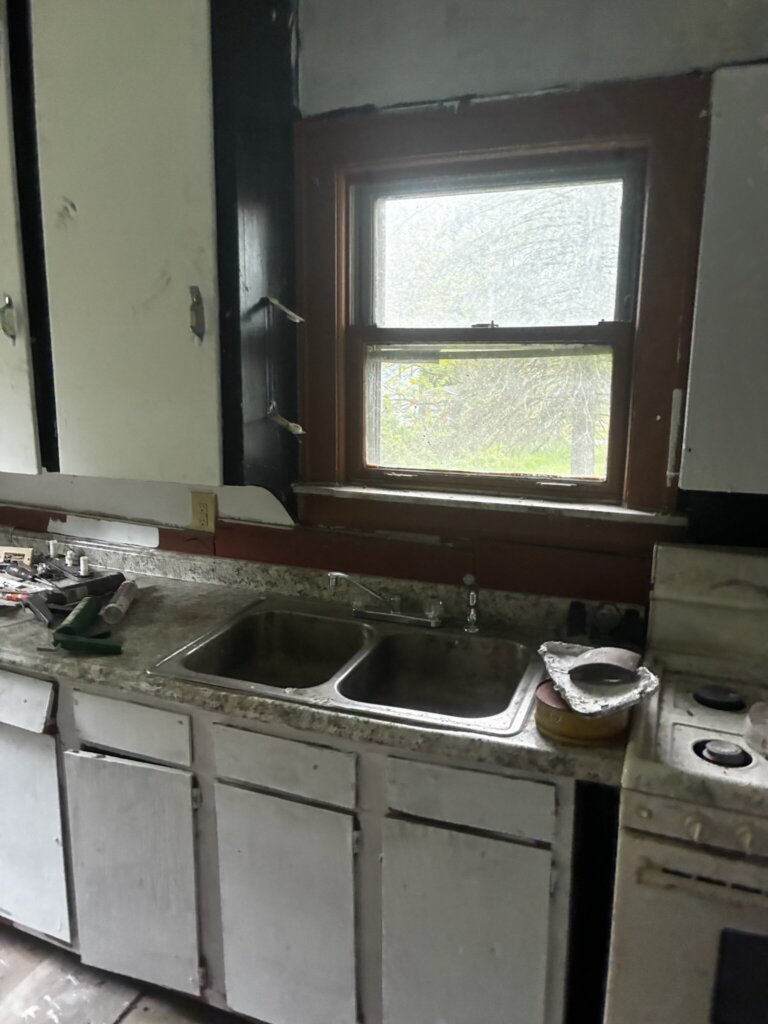
If the property has been owned by an older family member for decades, it may need substantial improvements before it’s ready for tenants.
For some heirs, managing a rental property is appealing.
For others, it’s an ongoing responsibility they don’t want.
Option 3: Sell The Inherited House
Selling may make sense when:
- Nobody in the family wants to live there.
- The property needs expensive repairs.
- Multiple heirs want to divide the proceeds.
- The house is vacant.
- The estate needs liquidity.
- You live too far away to manage it.
- You don’t want to become a landlord.
If you decide to sell, the next question is whether to prepare the property for a traditional listing or explore an as-is sale.
What Makes Selling An Inherited House In Lancaster Different?
Lancaster has a mix of older homes, established neighborhoods, historic architecture, and properties throughout Fairfield County.
That variety matters when evaluating inherited real estate.
Older Homes Near Downtown Lancaster
Some houses near downtown Lancaster and the surrounding historic neighborhoods have been owned by the same families for generations.
They may have attractive architectural details, original woodwork, or other features that buyers appreciate.
But they may also have aging roofs, older electrical systems, outdated plumbing, or deferred maintenance.
If the property is subject to local historic or architectural requirements, certain renovations may require additional review.
Check applicable rules with the City of Lancaster.
Established Neighborhoods Around East Main Street And Memorial Drive
Inherited homes in established residential areas may be structurally sound but cosmetically dated.
A house might have an older kitchen, worn carpet, outdated bathrooms, or years of accumulated belongings.
You may be able to sell it without completing every update.
Properties Outside Lancaster City Limits
Some inherited properties in Fairfield County have larger lots, barns, garages, wells, septic systems, or other features.
These characteristics can affect inspections, financing, maintenance, and buyer demand.
A rural property may require a different selling strategy than a typical city home.
That’s why a property-specific evaluation is important.
What If You Inherited A House That Needs Major Repairs?
This is one of the most common challenges.
Maybe your parents maintained the property as best they could, but expensive projects were postponed.
Now the house needs:
- A new roof.
- Updated electrical wiring.
- Plumbing repairs.
- Foundation work.
- HVAC replacement.
- New flooring.
- Kitchen and bathroom renovations.
- Water damage remediation.
- Extensive cosmetic improvements.
You may not have the money or desire to renovate the property.
And if multiple heirs are involved, they may disagree about how much to spend.
A traditional listing may still be appropriate.
But some buyers are willing to purchase houses in their current condition.
At Sell House Columbus, we evaluate inherited properties with a variety of repair needs.
Our upcoming guide on how to sell a house with major repairs in Lancaster Ohio 🔗 (Future: Post #10 – Major Repairs) will explain the options.
What If The House Is Full Of Your Parents’ Belongings?
This can be one of the most emotional parts of inheriting a property.
A parent may have lived in the house for decades.
Every closet contains clothing.
The basement is filled with boxes.
The garage is packed with tools.
And the family isn’t sure what to keep or discard.
You may feel pressure to clean everything out before selling.
But that isn’t always necessary.
Some buyers may agree to purchase a property with unwanted belongings remaining.
At Sell House Columbus, we may be able to accommodate that depending on the house and purchase agreement.
Before selling, identify and remove:
- Important documents.
- Family photographs.
- Jewelry and valuables.
- Cash and financial records.
- Sentimental belongings.
- Medications.
- Items belonging to other people.
Any agreement about what can remain should be documented clearly.
Our upcoming guide on how to sell a hoarder house in Lancaster Ohio 🔗 (Future: Post #12 – Hoarder House) will address extensive cleanouts.
What If Multiple Siblings Inherited The House?
This is another common situation.
Perhaps three siblings inherited their parents’ Lancaster home.
One wants to keep it.
Another wants to sell immediately.
And the third believes the family should renovate first.
Disagreements can delay decisions and increase expenses.
Start By Confirming Ownership
The will, trust, deed, and estate proceedings determine who has legal rights and who has authority to act.
Don’t assume every family member has identical decision-making authority.
Discuss The Financial Reality
Review the mortgage balance, property taxes, insurance, maintenance costs, and estimated property value.
A clear financial picture may help everyone understand the options.
Consider Whether One Heir Wants To Buy Out The Others
If one sibling wants to keep the property, a buyout may be possible.
The parties should obtain appropriate legal and financial guidance to structure the transaction.
Avoid Spending Estate Funds Without Proper Authority
An executor, administrator, or trustee may have fiduciary duties.
Significant expenditures or property decisions should be handled according to applicable law and governing documents.
If the heirs cannot agree, an Ohio probate attorney can explain the available legal options.
Can You Sell An Inherited House Without Making Repairs?
Yes, potentially.
Some buyers will purchase inherited properties as-is.
That means you may not need to replace the roof, remodel the kitchen, or complete extensive cosmetic improvements before selling.
However, an as-is sale doesn’t automatically eliminate applicable disclosure obligations.
And the property’s condition will affect the offer.
Our upcoming guide on selling your house as-is in Lancaster Ohio 🔗 (Future: Post #5 – As-Is Hub) will explain the process.
Should You Renovate Before Selling An Inherited House?
That depends on the expected return.
Some inherited homes can benefit from modest improvements.
Others require so much work that renovating may not be financially attractive.
Here’s a hypothetical example.
Imagine you’ve inherited a Lancaster house that could sell for $250,000 after substantial updates.
You also have an as-is cash offer of $205,000.
| Item | Renovate And List | Sell As-Is |
|---|---|---|
| Sale price | $250,000 | $205,000 |
| Repairs and preparation | -$25,000 | $0 |
| Selling expenses | -$15,000 | -$3,000 |
| Carrying costs | -$5,000 | -$1,000 |
| Estimated proceeds before debt payoff and taxes | $205,000 | $201,000 |
These figures are illustrative, not an appraisal, market estimate, or actual cash offer.
In this example, renovating and listing produces approximately $4,000 more.
But it also requires the heirs to fund repairs, coordinate contractors, and manage the listing.
For some families, the additional proceeds may justify the work.
For others, avoiding the renovation and moving forward may be more important.
The key is comparing realistic net proceeds rather than focusing only on the highest possible sale price.
Do You Owe Taxes When You Inherit A House In Ohio?
Taxes are an important consideration, but the answer depends on your situation.
Ohio Estate Tax
Ohio repealed its estate tax for deaths occurring on or after January 1, 2013.
That doesn’t mean every inherited property transaction is free of taxes.
Federal Estate Tax
Federal estate tax may apply to sufficiently large taxable estates, depending on the applicable exemption and other circumstances.
Most estates don’t owe federal estate tax, but the rules can be complex.
Capital Gains Tax
Inherited property generally receives a federal income tax basis determined under applicable tax rules, often based on the property’s fair market value at the date of death.
This is commonly called a step-up in basis, although adjustments and exceptions can apply.
If you sell the house, capital gains tax may depend on the selling price, adjusted basis, selling expenses, and other circumstances.
For example, if the property’s adjusted basis is $220,000 and the amount realized from a sale is $225,000, the taxable gain may be relatively modest.
But that calculation is only illustrative.
Don’t assume the tax basis equals the old purchase price or the county auditor’s value.
Consult a qualified tax professional about your particular situation.
You can also review inherited property guidance through the Internal Revenue Service.
Do You Have To Disclose Problems With An Inherited House?
Ohio generally requires sellers of covered residential properties to provide a residential property disclosure form, subject to statutory exceptions.
Certain transfers involving estates, fiduciaries, or other circumstances may qualify for exemptions.
You can review the requirements in Ohio Revised Code Section 5302.30.
An exemption isn’t permission to intentionally misrepresent known facts.
And selling as-is doesn’t automatically eliminate every legal obligation.
If you’re unsure what applies to an inherited property, consult an Ohio real estate attorney.
How Long Does It Take To Sell An Inherited House In Lancaster Ohio?
The timeline depends on ownership, title, property condition, and the selling method.
If the property is already legally transferable and the title is clear, a cash sale may move relatively quickly.
At Sell House Columbus, we can often work toward closing in approximately two weeks when title and other requirements allow.
But probate, missing documents, unresolved liens, or disputes among heirs may require additional time.
A traditional listing may also take longer because of marketing, inspections, and buyer financing.
The most important factor is establishing legal authority to sell before assuming a closing date is possible.
Can You Sell An Inherited Lancaster House From Another State?
Yes, potentially.
You don’t necessarily have to live in Ohio to sell an inherited property located in Lancaster.
The title company can explain available remote signing arrangements and any documents that require notarization or other formalities.
However, the seller must still have the necessary legal authority.
If you’re an out-of-state heir, it may be helpful to coordinate with:
- An Ohio probate attorney.
- The estate’s executor or trustee.
- A local title company.
- A trusted person who can provide access to the property.
- A buyer or real estate agent familiar with Lancaster.
A direct sale may reduce the need for repeated trips to Ohio, depending on the circumstances.
How Sell House Columbus Buys Inherited Houses In Lancaster Ohio
At Sell House Columbus, we’ve been buying houses throughout Central Ohio since 2012.
We understand that inherited properties can involve more than a typical home sale.
There may be multiple heirs, estate documents, repairs, belongings, and emotional considerations.
Our goal is to make the process straightforward and respectful.
Step 1: Tell Us About The Property
Call or text 614-300-5151, or complete the form on our website.
Let us know the address, general condition, and what you’re hoping to accomplish.
If the house is part of an estate or trust, let us know.
You don’t need to complete repairs before contacting us.
Step 2: We Evaluate The House
We’ll review the location, condition, and comparable sales.
Depending on the circumstances, we may arrange a convenient walkthrough.
Step 3: Receive A No-Obligation Cash Offer
If the property fits our buying criteria, we’ll explain our offer and proposed terms.
You can compare the offer with listing traditionally or renovating first.
There’s no obligation to accept.
Step 4: Coordinate Ownership And Title Requirements
If you decide to proceed, we’ll work with the title company to identify the documentation needed to transfer the property.
If probate or trust administration is involved, the appropriate attorney or fiduciary may need to participate.
Step 5: Close When The Requirements Are Satisfied
We can often work toward closing in approximately two weeks when title and other requirements allow.
Complicated estate or title issues may require additional time.
We’ll explain what’s realistic and work toward a convenient closing schedule.
Frequently Asked Questions About Inherited Houses In Lancaster Ohio
Can I sell an inherited house in Lancaster Ohio?
Yes, provided the person signing has the legal authority to transfer the property.
Does every inherited house have to go through probate?
No. Some properties transfer through trusts, survivorship ownership, transfer-on-death designations, or other lawful arrangements.
Can I sell the house while probate is still open?
Potentially. The executor or administrator may have authority to sell, subject to applicable legal requirements.
What if the inherited house still has a mortgage?
The mortgage generally remains secured by the property and must be addressed through payments, payoff, or another lawful resolution.
Can I sell an inherited house that needs major repairs?
Yes, potentially. Some buyers are willing to purchase properties in their current condition.
Do I have to clean out my parents’ house before selling?
Not necessarily. Some buyers may agree to purchase the property with unwanted belongings remaining.
What if my siblings disagree about selling?
Ownership rights, estate authority, and applicable legal requirements determine the available options. An Ohio probate attorney may be helpful.
Can I sell an inherited house if I live outside Ohio?
Yes, potentially. The title company can explain remote signing options and other closing requirements.
Do I owe taxes when I inherit a house?
Tax consequences depend on the estate and your circumstances. Ohio no longer imposes estate tax for deaths occurring on or after January 1, 2013, but federal tax rules may still apply.
Will I owe capital gains tax when I sell?
Possibly. The amount depends on the property’s adjusted tax basis, selling price, expenses, and other circumstances.
Can I sell an inherited house with unpaid property taxes?
Potentially. Outstanding taxes generally need to be addressed as part of the transaction.
How quickly can Sell House Columbus close?
We can often work toward closing in approximately two weeks when title and other requirements allow. Probate and title issues may extend the timeline.
Is there a fee to receive a cash offer?
No. Our cash offers are no-obligation.
How do I get started?
Call or text 614-300-5151 or visit https://sellhousecolumbus.com to request an offer.
Inherited A House In Lancaster Ohio? Let’s Make The Next Step Easier.
Inheriting a house can come with a lot of responsibility.
You may be dealing with probate.
Perhaps the property needs expensive repairs.
Maybe several family members have different opinions about what to do.
Or you may simply want to sell the house and move forward without spending months cleaning, renovating, and managing the property.
At Sell House Columbus, we’ve been buying houses throughout Central Ohio since 2012.
We have an A+ rating with the Better Business Bureau and more than 180 five-star Google reviews.
We evaluate inherited houses in a variety of conditions and provide straightforward cash offers when a property fits our buying criteria.
We’re not going to tell you that selling directly is always the best choice.
If keeping the house, renting it, or listing traditionally makes more sense, those options deserve consideration.
But if you’re ready to sell an inherited property without taking on extensive repairs, we’d be happy to explain whether we can help.
There’s no pressure and no obligation to accept an offer.
Call or text 614-300-5151.
Visit https://sellhousecolumbus.com to request a no-obligation cash offer.
Or learn more about how we buy houses in Lancaster Ohio
You don’t have to figure out every part of an inherited property sale on your own. Let’s explore what makes sense for the house and your family.
